
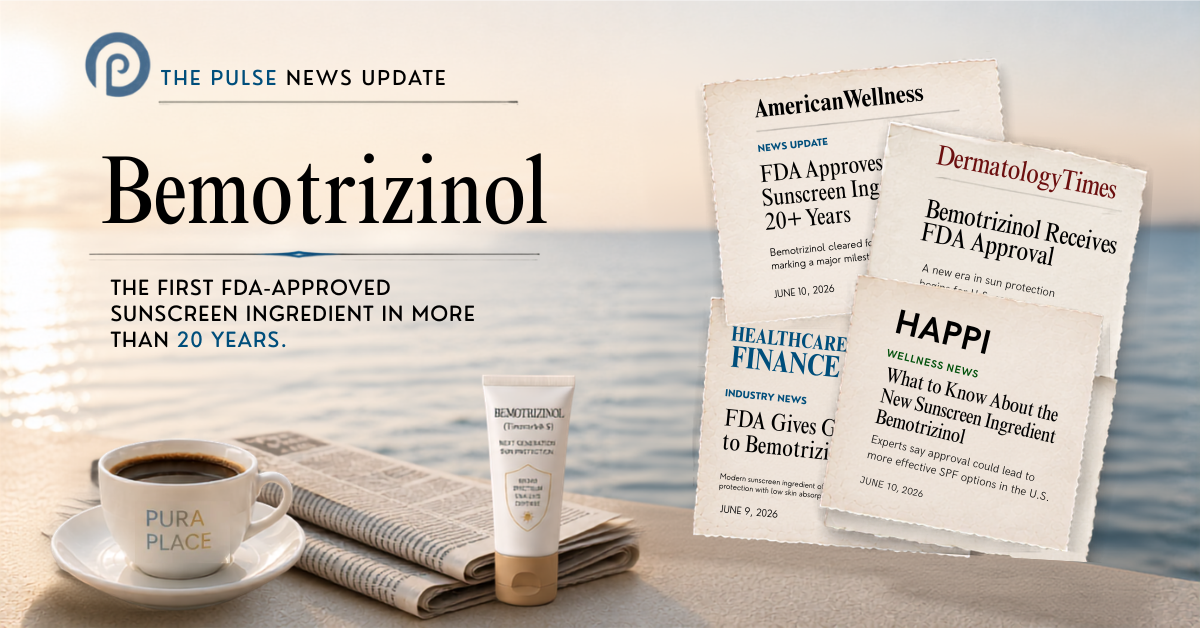
FDA Approves BEMT in Sunscreen: After 20 Years, It’s About Time!
Big sunscreen news: the FDA recently approved a new sunscreen active ingredient called bemotrizinol for use in the United States. It is also known globally as BEMT or Tinosorb S.
And yes, this is actually a big deal.
If sunscreen has ever made you feel like you were choosing between “ghostly white cast,” “greasy glazed donut,” or “fine, I’ll just wear a hat,” this update is for you.
For years, people in Europe, Asia, and Australia have had access to newer sunscreen filters that U.S. shoppers could not have in American formulas. All the while, Americans have been stuck trying to find formulas that protect well and look good, without stinging our eyes, pilling under makeup, or making us look like we lost a fight with a chalkboard. This approval is a major step forward.
So, What is Bemotrizinol?
Bemotrizinol is a broad-spectrum UV filter, meaning it protects your skin against both aging UVA rays and burning UVB rays. It’s highly stable, which helps keep the sunscreen from breaking down rapidly in direct sunlight.
Quick reminder:
- UVB rays are the loud, dramatic ones causing immediate visible damage most associated with sunburns.
- UVA rays are the sneaky little overachievers that contribute to premature aging, dark spots, and long-term skin damage.
An effective sunscreen needs to help with both. That is why “broad-spectrum” matters. BEMT is celebrated because its unique chemistry allows the creation of lighter, more cosmetically elegant formulas without needing a massive cocktail of extra ingredients. It is also highly photostable, which basically means, it holds up under intense sunlight without losing its power. We love a sunscreen ingredient with stamina!
Does This Mean It’s Time to Ditch Your Current Sunscreen?
No. Please do not panic-toss your cabinet full of sunscreen products.
The arrival of BEMT doesn’t mean your current sunscreen is suddenly unsafe or useless. If you have a formula you love, that you actually wear, and that says broad-spectrum SPF 30 or higher, keep using it.
The best sunscreen is still the one you will actually put on your face, neck, chest, hands, and wherever else the sun likes to remind you that you are not 22 anymore. But this update does mean we will start seeing better, more elegant options in the U.S. over time.
Think:
- Weightless textures
- Zero white casts
- Superior UVA protection
- More comfortable everyday formulas
And that last part matters, because sunscreen only works if we actually use it.
When Will Products with Bemotrizinol Be Available?
Not Overnight.
This approval means brands can now move forward introducing BEMT into formulas, but these products still need to be manufactured, labeled, distributed, and placed on store shelves. These things take time.
The current timeline means we likely won’t start seeing the first bottles drop on store shelves until possibly late Fall.
So no, this is not a “run to Target immediately” moment. It is more of a “good things are finally moving” moment.
What Should You Do Right Now ?
Keep it simple:
- Use a broad-spectrum SPF 30 or higher daily.
- Reapply when you are outside, sweating, swimming, or living your best patio-brunch life.
- Use hats, sunglasses, shade, and use a little common sense.
- If you need solid sunscreen product picks, check out our latest Pulse Post, Best Sunscreens of 2026 For All Skin Types
The Pulse @ Pura Place Position
The arrival of BEMT is incredible news for sunscreen users and a massive win for skin wellness.
Is this the end of the sunscreen struggle? No. But it is progress? Yes!
And around here, we celebrate progress—especially when it helps us age a little more gracefully, glow a little more responsibly, and avoid turning a “quick walk outside” into “why is my forehead crispy?”
More options are on the horizon. Until then, keep protecting your skin. Your future self will thank you!
Sources
- U.S. Food & Drug Administration (FDA). FDA Expands Sunscreen Options for the First Time in More Than 20 Years.
- dsm-firmenich. PARSOL® Shield Approved by FDA: Setting a New Era for U.S. Sun Protection.
- American Academy of Dermatology Association (AAD). How to Select a Sunscreen.
Do you recommend sunscreen that is SPF 50? What additional benefits can I expect