
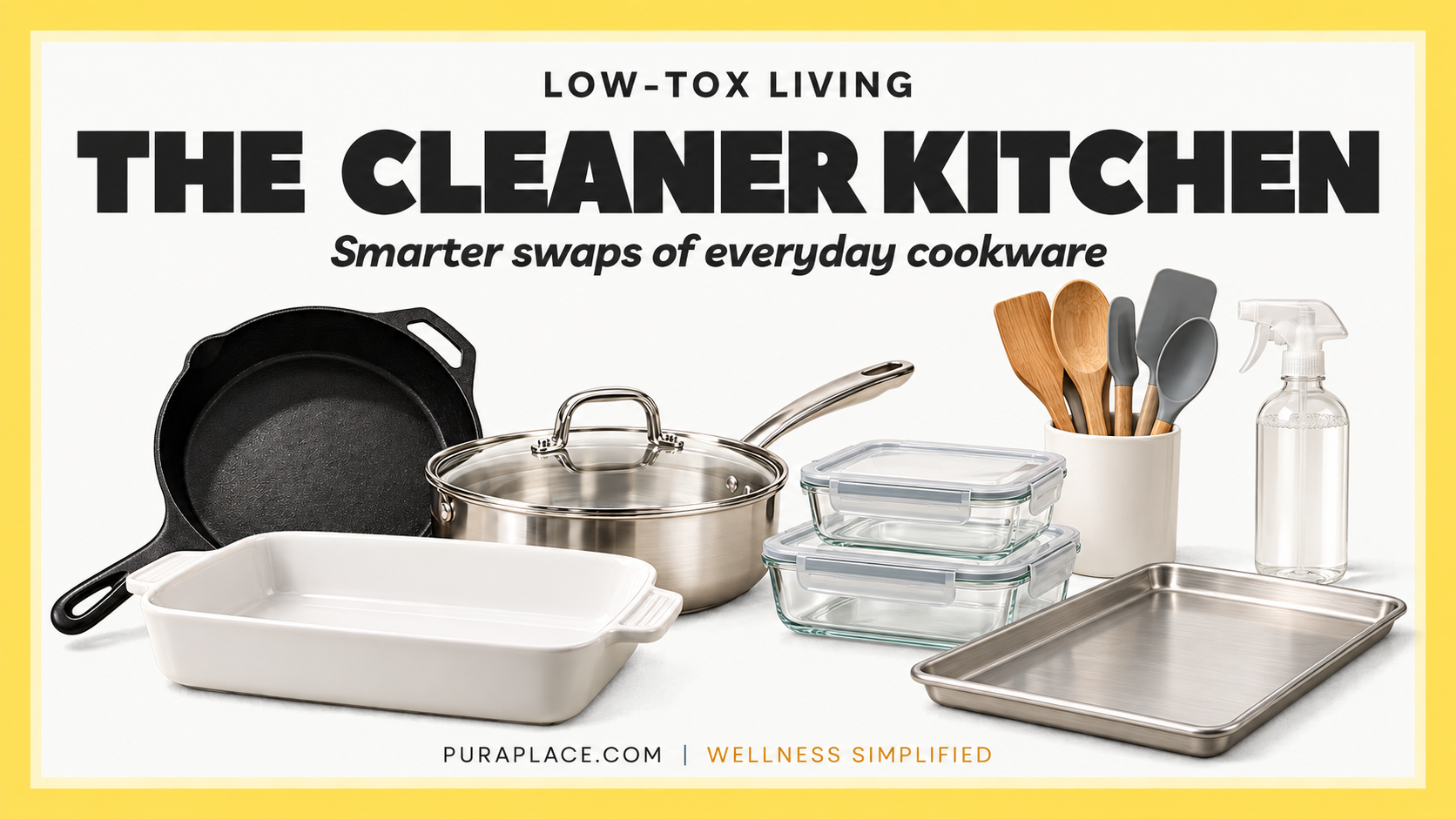
The Cleaner Kitchen | The Less Toxic Way
A cleaner, less toxic kitchen starts with everyday choices. You read the labels. You buy the good ingredients. You even manage to eat the spinach before it turns into a science experiment. But when was the last time you gave your trusty frying pan—or that cupboard full of plastic containers—the same attention?
A cleaner kitchen means choosing materials and habits that help reduce avoidable chemical exposure, protect indoor air, and keep food preparation hygienic. Heat, wear, and how we use an item can all affect what transfers into food.
You can start small. Focus on what you use most often and what needs replacing.
Cookware
Start with the pan you reach for every day. That trusty frying pan has earned its place—but it deserves a little scrutiny, too. Many nonstick pots and pans use PTFE, a type of PFAS. And that reassuring “PFOA-free” label? It does not mean PFAS-free.
Give your everyday pans a once-over. Peeling coatings, deep scratches, or a damaged cooking surface deserve attention. Keep nonstick cookware away from high heat, never preheat it empty, and use utensils that won’t scratch the coating.
Ready to swap? Consider ceramic nonstick cookware explicitly labeled PFAS-free, uncoated stainless steel, or cast iron. Start with your most-used pan—you’re already on your way to a cleaner kitchen.
Appliances
Air fryers, rice cookers, and countertop ovens deserve the same attention as your pans. Their baskets, inner pots, and cooking trays can contain PFAS coatings that create easy-clean, nonstick surfaces. These coatings put PFAS materials in direct contact with food and can release harmful fumes if severely overheated.
Ready to Swap: Consider countertop alternatives with PFAS-free ceramic nonstick coatings, uncoated stainless steel cooking surfaces, or heat-resistant glass designed for the appliance.
Bakeware
Many everyday bakeware items—such as cake pans, cookie sheets, muffin tins, and roasting pans—can hide PFAS in their nonstick finishes, added to help cookies slide off and cakes pop out. Metal utensils can scratch those coatings, and severe overheating can break them down and release harmful fumes.
Ready to Swap: Look for bakeware labeled PFAS-, lead-, and cadmium-free. Options include ceramic-coated bakeware, uncoated stainless steel, oven-safe glass, food-safe unglazed stoneware, or enameled metal.
Storage Containers
That cupboard full of plastic tubs… Plastic food containers can shed tiny particles called microplastics and nanoplastics. Heating can increase that release, but studies have also found shedding during prolonged cold and room-temperature storage. Your leftovers definitely deserve a better roommate than plastic.
Ready to Swap: Consider glass, stainless steel, 100% platinum-cured food-grade silicone, food safe natural woven basket. or organic cotton wraps coated with beeswax.
Utensils and Accessories
Include spatulas, mixing bowls, measuring cups, strainers, and cutting boards in your kitchen check. Plastic and nylon utensils can release chemical components into food, particularly during contact with hot meals. Plastic cutting boards bring another concern: everyday chopping can shave off tiny plastic particles. Not to sound dramatic, yet your ingredients shouldn’t come with a side of cutting board.
Ready to Swap: Consider stainless steel or glass for bowls, measuring cups, and strainers; solid wood or platinum-cured food-grade silicone for cooking utensils. For cutting boards, consider solid wood with a food-safe finish, or titanium or stainless steel with a surface specifically designed and independently tested to minimize knife dulling.
Kitchen Cleaning Products
That “freshly cleaned” smell can come with more than you bargained for. Some kitchen sprays, degreasers, and oven cleaners contain harsh ingredients that can irritate your eyes, skin, and lungs—and leave chemical residue on surfaces.
Ready to Swap: Consider fragrance-free dish soaps and surface cleaners with the EPA Safer Choice label, which screens ingredients for health and environmental safety.
The Pulse Perspective
Keep It Simple. Swap Over Time. You don’t need to overhaul your kitchen in one shopping trip. Start with one everyday essential, then make the next swap at your own convenience. A cleaner kitchen comes together one thoughtful choice at a time.
SOURCES:
- Environmental Science & Technology: “Cutting Boards: An Overlooked Source of Microplastics in Human Food?”
- U.S. Environmental Protection Agency (EPA): “Learn About the Safer Choice Label”
- Health Canada: Safe Use of Cookware and Bakeware — PFAS nonstick coatings, overheating, plastics, and bakeware materials.
- EPA: Understanding the Safer Choice Label — cleaning-product ingredient screening and the fragrance-free label.