
NAD+ Is Having a Moment: Longevity, Energy & Healthy Aging
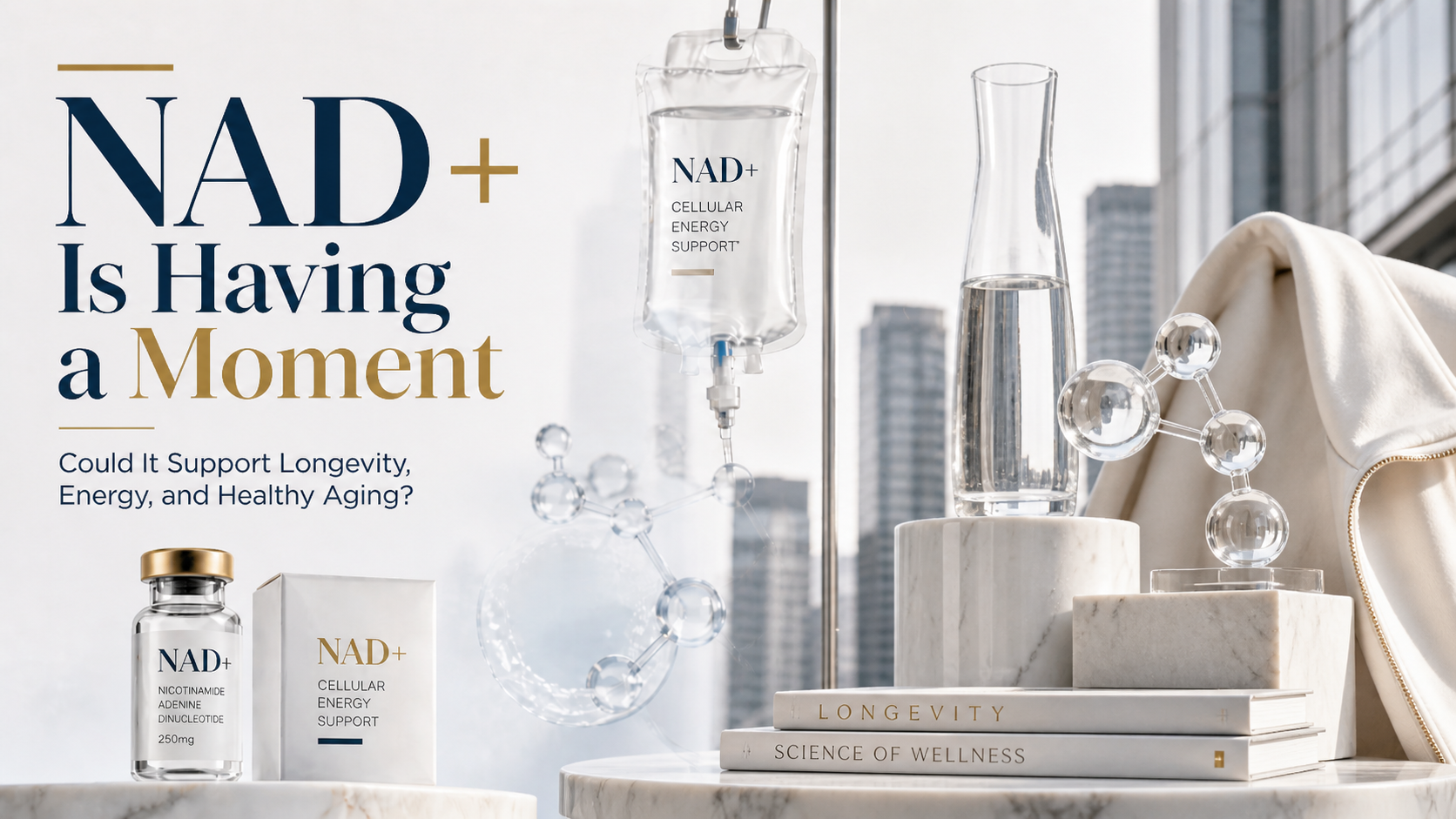
A friendly beginner’s guide to the longevity coenzyme that supports cellular energy, repair, and healthy aging.
Let’s talk about something that sounds very science-y, but is actually part of what keeps your body running every single day: NAD+.
You may have seen it pop up in conversations about peptides, longevity, IV therapy, energy, anti-aging, recovery, or “cellular health.” But before we go any further, let’s get the classification right:
NAD+ is not technically a peptide. It is a coenzyme.
That means it helps enzymes do their jobs inside the body. Think of NAD+ like a behind-the-scenes cellular helper: not flashy, but extremely important.
So… what is NAD+?
Short answer:
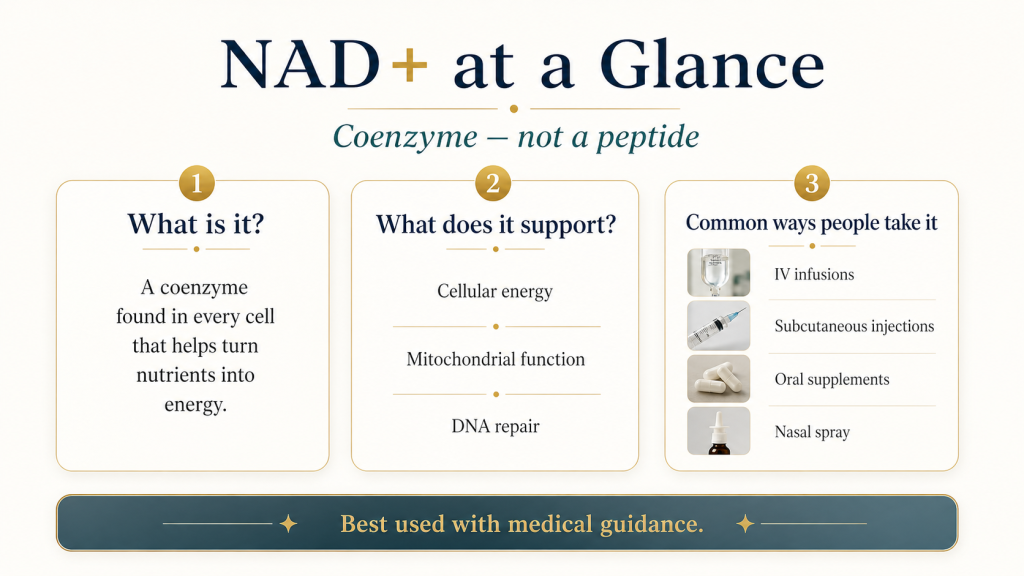
NAD+ is a coenzyme found in every cell of your body.
Longer, friendlier answer:
NAD+ helps your cells turn food into energy. More specifically, it helps move electrons during reactions that your cells use to make fuel. It is also involved in cellular repair and stress-response pathways.
Simple translation: NAD+ helps your cells do their jobs.
And when your cells are better supported, the whole body may feel more supported too – especially in areas like energy, focus, metabolism, and recovery.
Why is NAD+ connected to longevity?
This is where NAD+ gets its wellness-world reputation.
NAD+ is involved in several processes that matter for healthy aging, including mitochondrial function, DNA repair, metabolism, cellular stress response, and sirtuin activity. Researchers are also studying how NAD+ levels and NAD+ metabolism change with age.
Does that mean NAD+ is a magic anti-aging cure?
No. Not magical. Not a fountain of youth. Not a “take this and live forever” situation.
A more grounded way to think about it is this: NAD+ may support the systems your body already uses to create energy, repair, and maintain itself.
What benefits do people talk about?
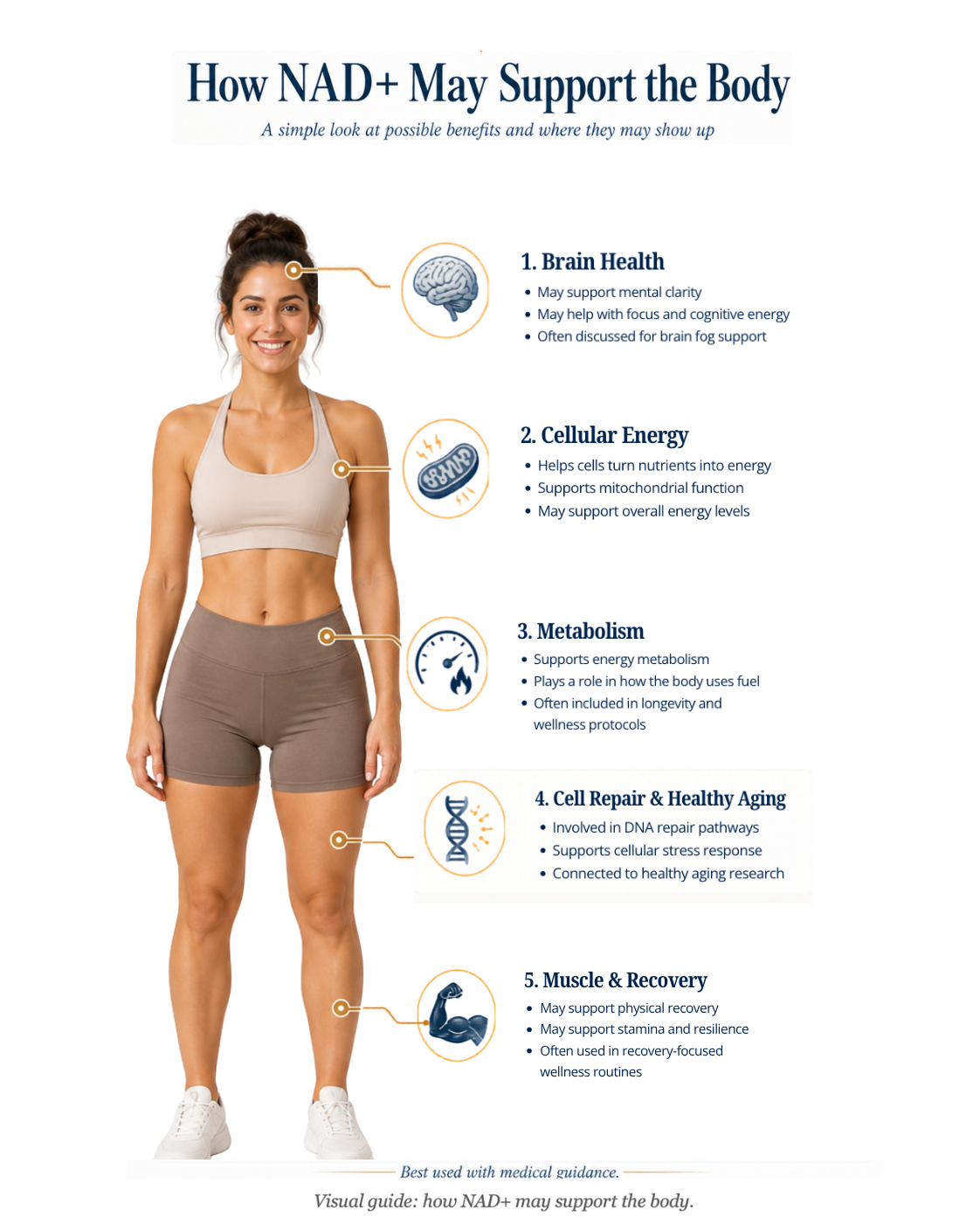
People are often drawn to NAD+ because the benefits sound very practical: more energy, clearer thinking, better recovery, and support for healthy aging. But here’s the honest note:
NAD+ is promising, but not guaranteed. Benefits vary by person, dose, form, health status, and overall lifestyle.
Potential short-term benefits people commonly discuss include:
- energy support
- mental clarity
- focus
- workout recovery
- overall wellness support
- less “brain fog” feeling for some people
Potential long-term areas of interest include:
- mitochondrial function
- DNA repair pathways
- cellular stress response
- metabolic health
- healthy aging research
- brain and nervous system support
- muscle and recovery support
The key is to keep the claims realistic. NAD+ support may help support cellular health, but it is not a replacement for sleep, nutrition, movement, labs, or medical care.
How do people take NAD+?
There are several ways people take NAD+ or support NAD+ levels. Some are clinical, some are convenient, and some are more researched than others. Availability and frequency vary widely by provider and by individual needs.
1. IV NAD+ infusions
This is the version you often see at medical spas, wellness clinics, longevity clinics, or IV therapy centers. NAD+ is given through a vein by infusion.
- Why people choose it: it bypasses the digestive system.
- How often: protocols vary. Some clinics offer a series of sessions followed by maintenance visits.
- Important: IV therapy should be done under medical supervision because it involves sterile technique, dosing decisions, and possible side effects.
2. Subcutaneous NAD+ injections
Subcutaneous means the injection goes into the fatty tissue under the skin. This may be offered by wellness clinics, functional medicine providers, telehealth programs, or medically supervised at-home protocols.
- Why people choose it: it can be more convenient than IV therapy.
- How often: provider-specific. Some protocols may use multiple doses per week; others may use a lower-frequency maintenance approach.
- Important: at-home does not mean “wing it.” You still want medical direction, sterile supplies, and clear instructions.
3. Oral supplements
This is the most accessible route. But most oral NAD+ products are actually NAD+ precursors – ingredients your body can use to help make NAD+.
Common examples include:
- NMN – nicotinamide mononucleotide
- NR – nicotinamide riboside
- niacin – vitamin B3
- nicotinamide / niacinamide – another vitamin B3 form
Oral supplements are often taken daily, but the right schedule depends on the product, dose, your medical history, and your clinician’s guidance. Quality matters, so look for reputable brands, clear labels, and third-party testing when available.
4. Nasal sprays
NAD+ nasal sprays are offered by some wellness and tele-health providers. People like them because they are needle-free and easy to use.
- How often: depends on the product and provider instructions.
- Important: this route has less mainstream clinical evidence than oral NAD+ precursors, so medical guidance is especially helpful.
5. Lifestyle support
This one is less flashy, but still matters. Your body naturally makes and uses NAD+, and the systems connected to NAD+ metabolism are influenced by everyday habits.
- regular movement
- strength training
- quality sleep
- balanced protein intake
- limiting excess alcohol
- supporting healthy blood sugar
- getting enough B vitamins
- managing chronic stress where possible
Not as glamorous as an IV drip, but still powerful.
Where can you get NAD+?
This depends on the form you’re looking for. Here are the most common routes:
A doctor or functional medicine provider
This is usually the safest starting point, especially if you have medical conditions, take medications, are pregnant or breastfeeding, or are considering injections or IV therapy.
Medical spas or wellness clinics
Many med spas and IV therapy clinics offer NAD+ infusions or injections. Ask who oversees the treatment medically, who administers it, what dose is used, how side effects are handled, and whether products are pharmacy-sourced.
Telehealth providers
Some telehealth companies offer NAD+ injections, nasal sprays, or oral protocols after an online intake. Look for real medical screening, licensed clinicians, pharmacy sourcing, and follow-up support.
Supplement brands
For oral NAD+ support, you’ll most often see NR, NMN, niacin, or niacinamide. Choose reputable companies and avoid brands making miracle claims.
Research-grade suppliers
You may see NAD+, NMN, or related compounds sold by research-grade suppliers. This needs a major pause:
Research-grade does not mean human-grade. Do not inject or ingest research-grade products.
Research-grade materials are typically intended for lab use, not human consumption. If you are using something in or on your body, use appropriate medical or supplement-grade products from reputable, properly supervised sources.
Is NAD+ safe?
Safety depends on the form, dose, route, product quality, medical history, and whether it is supervised. Oral NAD+ precursors have been studied in humans and are often reported as generally tolerable in short-term studies, but long-term data is still developing.
IV and injectable forms require extra caution because they involve sterile technique and medical oversight. Use extra care if you are pregnant or breastfeeding, actively being treated for cancer, immunocompromised, managing chronic illness, or taking prescription medications.
This is not because NAD+ is “bad.” It’s because your body is not a TikTok experiment.
The takeaway
You don’t need to be a scientist to understand NAD+. Here’s the simplest version:
NAD+ is a coenzyme – not a peptide – that helps your cells make energy, repair, and function properly.
It is involved in important healthy-aging pathways, and it is being studied because of its role in cellular energy, metabolism, and repair. People use NAD+ support through IV infusions, subcutaneous injections, oral supplements, nasal sprays, and lifestyle-based strategies.
But the big thing to remember is this: NAD+ is promising, not magical
Because longevity isn’t about chasing every trend. It’s about understanding what your body needs – and supporting it wisely.
Medical note
This blog is educational only and is not medical advice. NAD+ products and protocols should be discussed with a qualified healthcare provider, especially if you are considering IV therapy, injections, or have a medical condition.
Sources used for fact-checking
NAD+ metabolism and cellular aging review: https://pmc.ncbi.nlm.nih.gov/articles/PMC7963035/
Clinical evidence on NAD+ precursor supplementation in human aging: https://www.nature.com/articles/s42255-025-01387-7
Cleveland Clinic overview of NAD+ supplements and cautions: https://health.clevelandclinic.org/nad-supplement
Review of roles of NAD+ in health and aging: https://pmc.ncbi.nlm.nih.gov/articles/PMC10759992/